


Have you got an auto obsessive in your life?
Want to get them a great gift they’ll tell all their friends about?
At Duffy Motors, we know what car enthusiasts want to get for Christmas (mainly because it’s what we want for Christmas too).
So here’s what our mechanics think you should buy for your petrolhead partner or family member.
A scale model of their fantasy car

We all have a dream car we’d love to own one day (and some of us don’t shut up about it).
Unfortunately, most of these fantasy cars are outside the average gift budget. So what’s the next best thing?
Good scale models are super realistic and the replicas come in a range of sizes and prices.
The smallest (usually 1:64) are around 10cm long, while the biggest (usually 1:18) can measure over 25cm.
A race track experience
Does your loved one fancy themselves as the next Lewis Hamilton?
Get them a race track experience day for Christmas and let them show off their skills.
There are all sorts of race track packages out there. Most include a few laps in different supercars and come with expert instruction from a track expert.
Some tracks even offer a junior race day experience for kids as young as 10.
F1 tickets
The best way to experience a Formula 1 race is up close and personal.
There’s nothing like the smell of rubber and the scream of high performance engines whizzing past at 200 miles per hour.
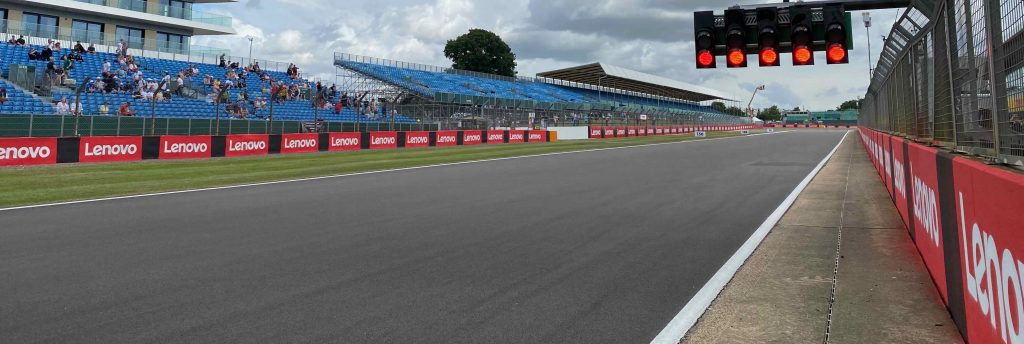
If your loved one is into F1, tickets to an iconic track like Silverstone, Monaco, or Monza would be an unforgettable gift. We would know – we celebrated Duffy Motors’ 10th birthday at the British Grand Prix at Silverstone in 2018.
A car detailing kit
Some petrolheads take great pride in keeping their cars looking tip top all year round.
If your partner or family member is always washing their car – rain or shine – then a detailing kit might be the perfect gift for them.
There are lots of kits out there – including some cheap stocking filler sets.
The bigger kits usually include a range of cleaning products, like specialist car shampoo, body polish, and wheel cleaner. They also come with a range of applicators, including sponges, cloths and brushes, plus instructions on how to use it all.
An automotive LEGO set
For the car enthusiast who loves to build and create, a four-wheeled LEGO set could be the perfect gift.
These kits can keep children and adults entertained for hours on end and include all sorts of amazing details like steering wheels and engines.
Some of the amazing kits on offer include the McLaren Formula 1 Race Car, the classic Back to the Future DeLorean and a Ferrari Daytona.
A personalised licence plate
If you’ve got a car-obsessed loved one who likes to stand out from the crowd then a personalised licence plate might be the way to go.
These plates can be customised with their name or a special message to add a unique touch to their ride.
There are all sorts of registration plates to choose from, but some of the most striking ones are expensive, so you might have to get creative with the letters and numbers.
A Christmas car service
Ok, this one isn’t quite as exciting as some of our other suggestions, but it is important!
Automotive enthusiasts know that getting your car serviced at least once per year can help optimise performance and keep your car chugging along happily year after year.
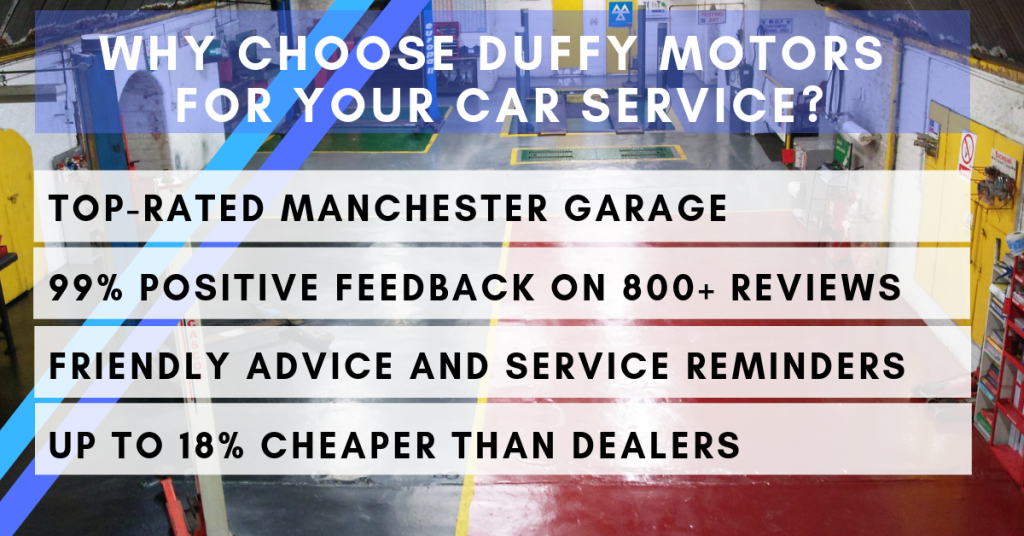
If your loved one is the kind of person that appreciates practical gifts – or you really can’t think of what else to buy them – then give Duffy Motors a call and we’ll try to make their Christmas extra special!
Call us on: 0161 834 4168.
Figures from the Department for Transport show that around one in three vehicles fails its MOT first time.
Most cars fail because of minor faults. These can be annoying. but they are usually quick and easy to sort out.
Sometimes failures are more serious, or a car will fail for multiple reasons. These problems are generally harder (and more expensive) to repair.
In this guide we’ll cover what happens if your car fails an MOT, whether you can drive it somewhere else and how you can get back on the road quickly.
What happens if my car fails its MOT?
Your car will fail its MOT if it has one or more ‘major’ or ‘dangerous’ problems.
You will get a VT30 ‘Refusal’ certificate which shows why your car has failed. The failure will also be logged in a national database.
If you think your car has failed incorrectly, you can appeal the result. The DVSA will be in touch within five days of receiving an appeal, but you should avoid repairing your car until the appeals process has finished.
 Lee’s top tip!
“Your MOT test certificate may show ‘minor’ or ‘advisory’ warnings. These aren’t serious enough to fail your car by themselves, but you should keep an eye on them and may need to repair them before your next MOT test.”
How long after an MOT failure can I drive?
If your car fails its MOT, and there are no ‘dangerous’ problems on your VT30 ‘Refusal’ certificate, you can drive your car, as long as the previous MOT is still valid.
If you’re caught driving a dangerous MOT failure, you are liable for a fine of up to £2500, a driving ban and 3 penalty points on your licence.
If your car has failed, and your MOT certificate is out of date, you can only drive it to get it repaired or to a pre-arranged MOT appointment.
You have a responsibility to make sure your car meets the minimum standards of roadworthiness at all times when driving.
What to do if your car fails its MOT?
If your car fails its MOT and you don’t want to appeal the decision, you have a number of options.
- Leave your car to be fixed – If your test centre also does repairs, you can leave your car with them and they’ll fix it. This is usually the quickest and easiest way to get back on the road and your retest will be free, if it’s done within ten working days.
- Take your car away and bring it back within one working day – If your car doesn’t have any ‘dangerous’ faults, you can drive it away and get it repaired by someone else. You’re entitled to a free retest at the original test centre if you bring the car back within one working day.
- Take your car away and bring it back after one working day – If you take your car away to get repaired, but don’t return it to the original test centre the next working day, you can pay for a partial retest, as long as the retest is within 10 working days. After 10 working days, you’ll need to pay for a full retest again.
- Scrap your car – If your car is very old, or the price of repairs is higher than the value of the car, you might think about scrapping it and getting something newer. Most garages will give you their opinion on whether it’s worth repairing, but the final decision will be left up to you.
For more information about MOTs, or to make an appointment, speak to a member of our team. Call: 0161 834 4168.
As we reported the other day, there’s been all sorts of action going on outside Duffy Motors this week. Apologies for any disruption to anyone bringing their car in – its a pity we weren’t given any warning!
Anyway here’s some pictures of the fun.


Air conditioning doesn’t just help keep your car cool on hot days.
In winter, air-con can help protect you from air pollution and keep you safe and comfortable when driving.
Switching your air conditioner on from time to time during the coldest months of the year can also help you avoid a large repair cost.
Using your car’s air conditioner during winter can:
- Protect you from air pollution
- Help demist your windows
- Help keep your air conditioning system in good working order
How air-con protects you from pollution
Poor air quality is the largest environmental risk to public health in the UK, particularly in urban areas.
The average commuter spends close to an hour travelling to and from work each day. If you’re driving along the same polluted roads and stuck in the same traffic jams each day, air pollution can heighten your risk of cardiovascular or respiratory illness.
Researchers in the United States found that using your car’s air conditioning can cut in-car pollutants by up to 34%, stopping you and your passengers from breathing in pollutants.
This is even more important during the colder months, because atmospheric factors mean that air quality is usually lower in the winter time.
Why you should use air-con to de-mist your windows

Misty windows can be a real driving hazard during wintertime. Driving with misty windows is actually illegal because you are driving with impeded vision.
Unfortunately, demisting your car windows can be painfully slow, especially when you’ve got somewhere to be. But you can speed up the process by using your air conditioning.
Car windows steam up because the heat from your body or breath warms the inside of the car and increases moisture levels. When this warm, moist air hits your cold glass window, it condenses and leaves a mist or fog on the windscreen.
Using your car’s heater can help clear mist. But your air conditioner can also be used as a dehumidifier, producing nice dry air to counteract the moist air in the car.
Use your air-con to avoid hefty repair bills
Car air conditioning works in the same way as domestic fridges, using a compressor and refrigerant gas to keep your car cool.
Unfortunately, these systems can be fragile, especially if they aren’t switched on regularly to circulate lubricant and keep everything in good working order.
If you don’t use your car’s AC for a few months – say, over winter – it can start to break down, leading to system leaks and hefty repair bills.
Switching your car’s air conditioning on for even a few minutes every few weeks is all that’s necessary to keep everything in good working order.
Why does my air-con smell bad?
If you catch a bad odour coming out of your air conditioner, it could be a sign that you haven’t used it in a while.
This is usually caused by bacteria and mould which can build up in moist conditions when your ‘dry’ air conditioning system is seldom turned on.
You can try to eliminate the smell by running the air-con and cleaning in and around the vents, but if the problem persists then you may need to take it to a for a more thorough clean or to change the cabin filter.
Why is my air-con not blowing cold?
If your air conditioning doesn’t blow as cold as it used to it’s probably a sign that you need to regas your system.
Regassing means replacing the refrigerant gas that’s used in your AC system. A garage will be able to regas your system quickly and at a low cost.
Is air conditioning included in an MOT check or service?
Your car’s air conditioning is not critical to the safe running of your vehicle, so it’s not included in an MOT safety check.
Generally speaking, it’s not included in a standard service either. Service schedules are usually drawn up by the vehicle manufacturer to keep the car running in top condition. But many manufacturers also have a separate air con service schedule that will recommend regassing, on average, every two years.
Want to get your car’s air conditioning checked? Speak to a member of the team and we’ll gladly take a look or include it in your next service. Call: 0161 834 4168.
Ask most people in Manchester what they think of the M60’s new ‘smart’ status and you’d probably get a barrage of complaints about it. The UK’s controversial smart motorways have come under renewed criticism amid safety concerns following a notable increase in the number of near misses and fatal accidents.
An investigation by BBC Panorama found on one of the two converted sections of the M25, there has been almost 1,500 near misses since the scheme was introduced. The preceding five years saw just 72 near misses.
London and the south east aren’t the only regions to experience a bumpy transition to smart motorways. Here in Greater Manchester, we have experienced our fair share of construction delays, drawing the ire of many who live and work in the region.
The M62 already has smart motorways in operation between Junction 18 and Junction 20 at Rochdale, a five-mile stretch that was completed in 2018. However, preliminary work has been undertaken between Junctions 20 and 25 with principal construction due to start later this year.
However, a recent government review seems to have put the brakes on the proposed smart motorway. The project is expected to cost between £283 million and £392.3 million, however as of May 2020, there is no completion date in sight.
With smart motorway construction affecting all of us here in Greater Manchester, it’s important to understand what they’re all about.
Why are Smart Motorways So Controversial?
Highways England who operate, maintain, and improve all motorways and major roads in England, insist that smart motorways are safer than the current motorway infrastructure. They point to statistics, including journey reliability being improved by 22% and accident personal injuries have been reduced by 50% as evidence of this. Yet despite these favourable statistics, the rise in accident near misses is alarming.
Smart Motorways are controversial and there are several reasons why. Here’s a look at just a few of the reasons why the widespread adoption of smart motorways has been met with consumer caution.
Driving experience
It can be argued that motorists perhaps aren’t used to driving on smart motorways and this may have contributed to the rise in accidents. However, any motorist with the experience to drive on the motorway should be able to adapt to any new infrastructure quite seamlessly.
Despite introducing measures to calm traffic congestion at peak times, such as variable speed limits and the additional lane that was formerly the hard shoulder, many motorists across Greater Manchester are not convinced of the merits of smart motorways, even those with decades of experience.
Breakdowns are a little complicated
Unlike the traditional motorway infrastructure, smart motorways do not have a hazard line for use in the event of a breakdown or accident, but a layby called an Emergency Refuge Area or ERA. These laybys are stationed every mile and a half, are marked by large blue sign, and have an orange SOS stop. They were planned for Greater Manchester’s motorways, before the brakes were pulled on all future construction.
Should motorists be involved in an accident they have been advised by the RAC to get to the nearest ERA, leaving your car with its hazard lights on. Once there, all passengers should exit the vehicle through the passenger door and stand behind the crash barrier.
There a several problems with this. First, without the hard shoulder, people are perilously close to fast moving traffic. There’s also the issue that your nearest ERA could be almost a mile-and-a-half from the scene of your accident or where your car broke down. This means that for people to get help, they may find themselves walking for 45-minutes or more just to reach the ERA. And, then there’s the issue of leaving your car at the scene of an accident or breakdown.
Variable speed limits
Another contentious issue with smart motorways is the variable speed limits. Opponents to smart motorways in Greater Manchester – or anywhere in the UK – believe that without clear indication of the variable speed limits, motorists will consistently be caught speeding without knowing that they are breaking the law.

This worry is compounded by the increase in speed cameras on the motorways. The chances of getting caught speeding even when travelling at seventy miles an hour through a fifty zone that isn’t clearly marked are exponentially higher. With speeding sentencing structures becoming increasingly severe (offenders could be fined as much as £2,500 for speeding offences), it seems unfair that speed limit zones may not be as clearly marked as they could be.
Vehicle detection systems
As noted by both the AA and the investigation by BBC Panorama, the lauded estimates of any safety improvements of smart motorways in Greater Manchester and throughout the UK is reliant on vehicle detection systems being installed and functioning properly.
Arguably, the biggest problem the All Party Parliamentary Groups have cited with smart motorways is that, despite Highways England promising a swift roll out of the initial 400-mile network, just 25 miles are responsive to vehicle detection systems.
Moreover, data has suggested that on those roads without an automotive vehicle detection system, it takes an average of 17 minutes for a vehicle to be recovered. Most damaging of all, BBC Panorama discovered that one detection camera was broken and left unattended to for nearly 12-months – yet further evidence that the infrastructure for smart motorways is yet not in place.
It’s clear that there’s much progression needed for smart motorways in Greater Manchester – and indeed throughout the UK – to become efficient enough to replace the existing motorway infrastructure.
However, what shouldn’t be underestimated is our ingenuity and determination. Smart motorways may not change our driving experience in the coming months, but they likely will at the very latest by the end of the decade.
Contact Duffy Motors today on 0161 834 4168. Our top-rated Manchester MOT centre has been servicing the people of Manchester for more than 30-years.
It’s hard to think of a time when Britain’s roads have been more barren. Data from car insurance experts, Admiral, found that average number of trips taken by motorists decreased by 54% in just the first week of lockdown.
With the recent relaxation of safety measures, drivers across the UK may be tempted to get behind the wheel. However, let’s be clear. Although driving to the supermarket and pharmacy are permitted, driving to the countryside for a short spring holiday is not. We all need to stay alert, control the virus and save lives.
So, herein lie the questions: how do you look after your car during the coronavirus? What happens if you leave a car unused for a long period of time? If you’re unsure about how to keep your car in tip-top shape throughout lockdown, our simple guide should help you. Be sure to read all the tips as they’re all vital to keeping your car in good working when you’re not hitting the roads all too often, if ever.
Keeping your brake discs in good working order
When left stationary for prolonged periods, your car’s brake discs will begin to corrode. This causes two problems: a sticking handbrake, and eventually a complete seizing of your cars brakes entirely.
If your hand brake has seized, you’ll need a mechanic to fix the handbrake cable. Depending on whether you visit a local garage or a dealership service centre, this can cost you anywhere from £70 to £150.
Fortunately, preventing brake discs from corroding is reasonably easy. All you need to do is start the engine and inch your car forwards and backwards every so often. If you’re parked on a flat driveway, you shouldn’t have to worry about engaging the handbrake, however if you’re parked on a slope, make sure that you have hold of the handbrake – you don’t want to roll down a hill or hit a car behind you.
How long can you leave a car without starting it?
 Car engines are designed to be used frequently. They’re not designed to be used for a bi-weekly five-minute trip to the shops, let alone be stagnant on the owner’s driveway for months at a time.
If you don’t use your car regularly you can expect to several problems to mount. Battery fluid will drain which will cause its lifespan to be drastically reduced. Engine belts and wires will corrode, cylinder and valve walls will begin to fail, and most of the liquids, like engine oil and brake fluid will break down, losing their ability to lubricate essential components.
To stop your engine failing you’ll need to bring it to operating temperature. Oil, for instance, needs to have a consistent viscosity. The colder the oil, the thicker the oil becomes the more problems you’ll have. Thicker oils do not transfer heat as effectively as thinner oils which will affect your car’s reliability. This causes an accelerated chemical breakdown which can lead to harmful sludge deposits – something that you’ll have to visit a mechanic to fix.
Rotate the essential journeys if you have more than one car
Some people think that by just starting their car, revving the engine a little and then leaving it running on the driveway for a few minutes is enough to keep it in reasonable shape whenever they’re not using it routinely.
Well, according to the RAC this could do more harm than good. Why? Just starting your car and leaving it running for five minutes every so often is a good way to drain the battery. The RAC recommend driving your vehicle for 15-20 minutes to keep the battery in tip-top shape.
If you live in a two-person household, try alternating essential journeys when you order your click and collect from the local supermarket, pick up any prescriptions or head out on an essential journey. However, be mindful that repeated short journey’s will drain your battery, so following the government’s guidelines of shopping for necessities as infrequently as possible is good practice.

Keep an eye out for flat tyres
Most of us don’t remove the wheels and tyres of our cars when storing them cars on the driveway for a long time. This is a great way to preserve tyre integrity.
The weight of the car pushing down on the tyres causes them to bulge and develop flat spots. This is a common defect that afflicts cars that are left stationary for weeks or months at a time. The best way to keep your tyres in good shape when not using your car is to make sure that they’re fully inflated.
General guidelines state that tyres should be inflated to 50 psi to prevent flat spotting. So, keep your tyres inflated if you want to keep your car in tip-top shape during lockdown. If you don’t have a tyre inflator, don’t worry. You can buy one for around £20.00 – which is a whole lot cheaper than having to have your tyres replaced!
These are our four tips on how to look after your car during the coronavirus lockdown. If you’d like to learn more about how to care for your car in lockdown or have any further questions contact Duffy Motors today on 0161 834 4168. With more than thirty years’ experience, we can offer you sound car care advice, both in the short and long-term.
.
As of the 14th April, Duffy Motors is open for business. You can book in your vehicle in the normal way – either online here or by phone on 0161 834 4168.
You can book in for any of our services, but the main reason we will be reopening is so that motorists can get their cars MOT’d – we’ve been inundated with enquiries over the last few weeks.
There has also been new legislation launched around MOTs since the coronavirus crisis started. You can read it in full detail here but the key points that may affect our customers are as follows:
New Covid-19 MOT legislation – main points
- 6 month extension
The biggest change to the previous law surrounding MOTs is that vehicles whose MOT was due to expire ON OR AFTER 30th March 2020 can take advantage of a 6 month extension. This extension is only valid for ‘light vehicles’, so that means:
- A car
- A motorbike
- A small or light van eg a Transit
- Other light vehicles that don’t fall into the above categories eg a 3-wheeler, Quad etc
- You won’t get a MOT certificate
As your vehicle will continue to have its MOT, the insurance / road tax will remain valid but you won’t receive a new certificate to cover the additional 6 months. If your tax needs renewing soon, check online that your MOT expiry has been extended BEFORE renewing your tax (see next section).
Coronavirus MOT extension – your responsibilities
Although all vehicles in the category above will automatically have their MOT expiry extended for 6 months, you as the owner still have certain responsibilities.
- You are responsible for checking that your MOT expiry has been extended. The DVSA (Driver and Vehicle Standards Agency) will update your MOT when its close to its expiry date. The advice is to check online 3 days before it was originally set to expire. If it hasn’t been extended, contact the DVSA on covid19mot@dvsa.gov.uk.
- You must keep your car roadworthy. Just because you have an extended MOT, it of course doesn’t mean your car is now free from requiring maintenance. There is an online guide on how to check your vehicle is roadworthy but if you have any doubts, contact us here at Duffy Motors.
YOU CAN BE FINED UP TO £2500, BANNED FROM DRIVING AND RECEIVE PENALTY POINTS IF YOU ARE CAUGHT DRIVING AN UNFIT VEHICLE. There is no need to take this risk; Duffy Motors and other car garages are open and available to keep your vehicle in a roadworthy condition.
Call 0161 834 4168 or contact us online if you need help or have any questions. You can also keep up to date with our opening hours at https://twitter.com/DuffyMotors and https://www.facebook.com/DuffyMotorsLtd/.
We’re careering headlong towards Christmas, but we don’t want to be careering off the road at the same time. Because the twin hazards that face us at this time of year are the fact that a) the roads are becoming icy, plus b) the challenge of other drivers full of festive spirits(s) and the general excesses of the Christmas party season.
There are a few simple things you can do to insulate yourself from the risks associated with winter driving and we have listed five of the key ones here:
Coping With A Winter Wonderland
A really simple, but effective one to start. The Council will no doubt be gritting the roads and it’s that kind of grit the can get kicked up by traffic and obscure a driver’s vision, so make sure you keep the windscreen wash topped up. Also, a great tip is to keep your vehicle consistently full of petrol or diesel. This is firstly so that you have plenty of fuel if you get stranded, or perhaps need to keep the engine going to stay warm. However, a full tank may also help prevent any residual water freezing in the fuel pump.
Jack Frost Nipping At Your Tyres
Of course to the north of us in the UK, many Scandinavian countries require drivers to change to winter tyres as soon as winter approaches. While that is probably unnecessary beyond more remote, rural areas, all drivers should nevertheless keep a close eye on the pressure in the tyres of their cars. Pressures drop with the drop in the temperature and if you’re driving around in a car with low pressure in the tyres, you will find that it affects the control of the car, and will also begin to wear the tyres out.
Let It Snow, Let It Snow, Let It Snow
We have had some rather severe winters recently, and climate change campaigners will tell you winters are set to become even more harsh. We have seen roads cut off and drivers stranded and, while an extreme scenario, it may serve you well to consider keeping some useful items in your car during the winter months, especially if you live in more rural areas, or are planning journeys to more remote places to see friends and family. You can purchase such kits ready-made; equally, you may be able to assemble the items yourself, which should include: a blanket, a torch, a first-aid kit, de-icer, a spade to dig out snow, a phone charger that can run from the car battery and jump cables. Belt and braces, maybe, but better safe than sorry if the snow comes tumbling down!
Baby Its Cold Outside!

Obviously as winter truly sets in after Christmas, freezing temperatures are likely. And it’s then that we bear witness to the traditional suburban scene, in streets all over the UK: drivers at the front of their houses frantically trying to de-ice the windows and get their cars warmed up. As per point 1, make sure coolant levels are generous at this time of year, and consider adding water as well as antifreeze to the radiator in your car. This can help by creating a lower freezing point for the engine, thereby helping it through these tricky weeks, when both cars (and their owners) are susceptible to the cold.
Do You Hear What I Hear?
Yes – its the sound of your car not starting! Like their owners, vehicles can find it harder to operate in the winter months. Their batteries can run down, as it’s harder for the battery to run in colder temperatures. This is especially true for diesel cars, that might need extra warming up in the mornings. So, get your battery tested at your local mechanics and if it’s looking enfeebled, then you are probably better off replacing it before the cold sets in, when a weaker battery will struggle to fire up.
Take these simple tips on board, and you and your car will hopefully have a fabulous festive season. Alternatively, saddle your Peugeot to some reindeer and trust in the fuel of festive spirit!
It sounds like a scene from a Wallace & Gromit movie and indeed the consequences can be equally perilous. You’ve had a long day at work… or perhaps your mind is on the weekend’s derby game… you’re on the petrol station forecourt and you’ve realised that even though it’s called a petrol station you actually need diesel for this car. And now you’ve just filled the tank (precisely rounding it off to an exact pound… always important) with expensive – and perfectly unusable – fuel.
What to do? Well, the first thing is not to panic and certainly not to beat yourself up about it. We’ve all done it, and it happens all the time. However if you read this guide on how to prevent the situation happening in the first place… and then what to do if it does happen, you have at least put in the ground work. And you will have done what you can to avoid perhaps the most aggravating mistake in day-to-day life… along with losing your glasses and putting on the wrong trousers (because you can’t find your glasses).
Check behind the petrol cap cover
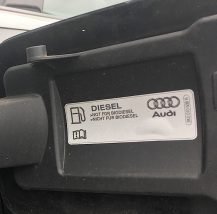 First of all let’s think about prevention, and stopping the situation happening in the first place. You may find, for instance, that there is a reminder – on the inside of the fuel flap – that informs you of the fuel you must use for that vehicle. This can be particularly useful if you have multiple cars in the family, that perhaps use different fuel. With the best will in the world, it doesn’t take much for you to lose track of which one you’re in, so having a written reminder can really help clarify the situation. If you want to go further, and have £15-30 to spend (remembering it can prevent a costly mistake) you can buy a diesel fuel cap that will actually physically prevent you filling a diesel car with petrol, as diesel pumps are usually a little bigger than the petrol ones anyway. But of course nothing beats the very simple strategy of paying attention every time you pull up on the forecourt and taking your time, no matter what is running through your mind, to think through what fuel you need.
Don’t move!
So that’s the prevention side of things. If you’ve read all of that but still use the wrong fuel, then read on for the cure. Firstly, on realising the mistake, in no circumstances turn on the engine or attempt to drive the car. In fact, don’t even put the key in. Instead, put the car into a neutral gear and either yourself, or with help (perhaps a friendly someone from the petrol station) move the car away from the pumps and into a secure location. You will need to tell someone at the petrol station about the situation (sparing blushes) and then consider next steps. This might include phoning your breakdown cover provider, should you have one, or perhaps your insurer, if you are covered for this eventuality. If you are covered – then lucky you – they may well tow you home and then organise draining out the fuel. If not, you will need to contact a local garage and have someone come out to save you, someone trained in how to drain out the wrong fuel, flush out the system and allow you to fill up with the right fuel. Be prepared to pay over a hundred pounds for the call out AND the mechanic is likely to keep the drained fuel as well.
So what’s the big deal anyway? Well, if you’ve got a diesel car you may know the diesel acts very differently to petrol, and actually helps lubricate the engine. Add petrol to that mix and you in effect add a solvent that stops that process, creating friction and damaging the engine immediately. Conversely, if you have a petrol car and add diesel, then you’ll probably find that the car won’t start at all, as diesel acts very differently to petrol. And that will actually save you time and bother because after all of this, if you do start the car and drive away with the wrong fuel, the car will soon stop working and you will be faced with much more damage and potential costs to fix the situation.
Best advice? Just think very carefully the next time you pull up to fill up. Fuel is expensive these days, as we all know… but not as expensive as getting this one wrong.
Customer Reviews
See what some of our clients have shared about Duffy Motors
We Encourage our customers to share their experiences with us.